Managing finances becomes more complex as a business grows. Revenue may increase, but so do expenses, working-capital requirements, tax obligations, cash-flow challenges and financial decisions.
Many small and growing businesses cannot justify hiring a full-time Chief Financial Officer (CFO), while relying only on routine accounting may not provide enough financial insight for management.
This is where Virtual CFO services can be useful.
What Is a Virtual CFO?
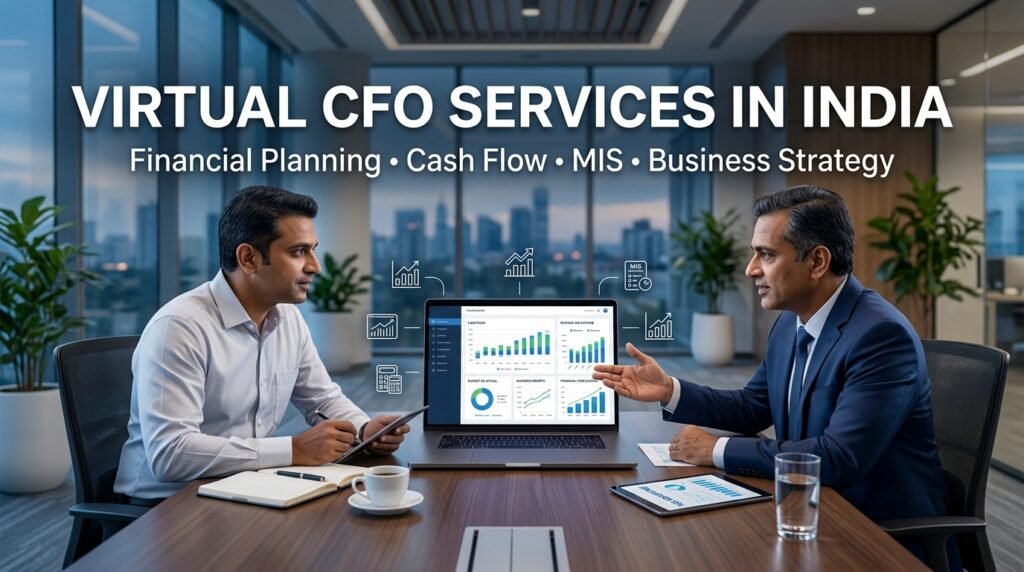
A Virtual CFO is a finance professional who provides CFO-level financial planning, analysis and management support on an outsourced or part-time basis.
A Virtual CFO can work with business owners and management teams on areas such as:
- Financial planning and forecasting
- Cash-flow management
- Monthly MIS reporting
- Budgeting
- Profitability analysis
- Working-capital management
- Financial performance analysis
- Management reporting
- Funding preparation
- Financial decision support
The exact responsibilities depend on the business and the scope of the engagement.
Why Are Businesses Considering Virtual CFO Services?
Traditional accounting mainly focuses on recording and reporting financial transactions. While accurate accounting is essential, business owners may also need answers to broader questions.
For example:
- How much cash will the business need over the next three months?
- Which products or services generate the highest margins?
- Why are receivables increasing?
- Can the company afford a new investment?
- How should the business plan its next year’s budget?
- What financial information should be prepared for a lender or investor?
A Virtual CFO can help management analyse these areas and turn financial information into useful management reports.
What Does a Virtual CFO Do?
1. Financial Planning and Forecasting
A Virtual CFO can help prepare financial forecasts based on historical performance, expected sales, expenses and planned investments.
Forecasting can help management understand possible future revenue, expenses and cash requirements.
2. Cash-Flow Management
Profit and cash flow are not always the same.
A business may report a profit while still facing cash-flow pressure because customers have not paid invoices or because the business has significant inventory, loan repayments or supplier obligations.
A Virtual CFO can help prepare cash-flow forecasts and monitor expected inflows and outflows.
3. Monthly MIS Reporting
Management Information System (MIS) reports can provide business owners with a regular overview of financial performance.
Depending on the business, an MIS report may include:
- Revenue
- Gross profit
- Operating expenses
- Profitability
- Accounts receivable
- Accounts payable
- Cash position
- Working capital
- Key performance indicators
Regular reporting can help management identify changes in business performance earlier.
4. Budgeting
A Virtual CFO can assist in preparing an annual operating budget.
Once the budget is prepared, actual performance can be compared with the planned figures.
For example:
Budgeted revenue: ₹50 lakh
Actual revenue: ₹43 lakh
The management team can then investigate why revenue was below the planned level and determine whether changes are required.
5. Working-Capital Management
Working capital can have a significant impact on a company’s cash position.
A Virtual CFO may monitor:
- Customer receivables
- Supplier payables
- Inventory
- Collection cycles
- Payment schedules
- Short-term funding requirements
The objective is to give management better visibility over money tied up in day-to-day operations.
6. Profitability Analysis
Revenue alone does not always show whether a business is performing well.
A Virtual CFO can analyse profitability across different areas such as:
- Products
- Services
- Customers
- Locations
- Business segments
- Sales channels
This can help management understand where margins are being generated and where costs may need further review.
7. Financial Reporting for Investors and Lenders
Businesses seeking funding may need organised financial information and projections.
Depending on the engagement, a Virtual CFO may assist with:
- Financial projections
- Cash-flow forecasts
- Management reports
- Business plans
- Funding documentation
- Investor reporting
- Lender-related financial information
Virtual CFO vs Accountant
A Virtual CFO and an accountant can perform different but complementary functions.
An accountant generally focuses on accounting records, reconciliations, financial statements and routine accounting or compliance activities.
A Virtual CFO generally focuses more on financial analysis, forecasting, planning and management-level decision support.
For example:
Accountant:
“How much did the company spend last month?”
Virtual CFO:
“Why did expenses increase, how does this affect margins, and what should management monitor next month?”
The actual division of responsibilities depends on the business and professional engagement.
Who Can Benefit From a Virtual CFO?
Virtual CFO services may be considered by:
- Startups
- MSMEs
- Growing private companies
- Family-owned businesses
- Manufacturing companies
- Service businesses
- Technology companies
- E-commerce businesses
- Companies preparing for fundraising
- Businesses expanding operations
A company does not necessarily need to be very large before considering CFO-level financial support. Financial complexity and management requirements can also determine the need.
When Should a Business Consider a Virtual CFO?
There are several situations where a business may start looking for CFO-level support.
Growing Revenue but Poor Cash Visibility
If sales are increasing but management does not have a clear view of future cash requirements, cash-flow forecasting may become important.
Increasing Financial Complexity
As a business adds employees, customers, suppliers, locations or products, financial management can become more complicated.
Preparing for Fundraising
Businesses approaching investors or lenders may need reliable financial reports, forecasts and projections.
Working-Capital Pressure
Increasing receivables, inventory or short-term liabilities can create cash-flow challenges even when the business is profitable.
Founder Handles Everything
Business owners often manage finance, sales, operations and strategy themselves during the early stages.
As the business grows, having dedicated financial management support can help organise these responsibilities.
What Are the Benefits of Virtual CFO Services?
The potential benefits depend on the scope of work and the quality of the company’s financial information.
Common areas include:
- Better financial visibility
- Regular management reporting
- Improved cash-flow planning
- Structured budgeting
- Better working-capital monitoring
- Financial forecasting
- Improved funding readiness
- More organised financial decision-making
A Virtual CFO does not guarantee business growth or profitability. Instead, the role is to provide financial information, analysis and planning support that management can use when making business decisions.
How Much Do Virtual CFO Services Cost?
Virtual CFO fees vary depending on factors such as:
- Size of the business
- Complexity of operations
- Number of entities
- Reporting requirements
- Frequency of meetings
- Scope of financial analysis
- Funding or investor requirements
- Level of CFO involvement
Some businesses may require only monthly reporting and financial reviews, while others may need ongoing financial planning and management support.
Therefore, businesses should compare the scope and deliverables rather than looking only at the monthly fee.
How to Choose a Virtual CFO Service Provider
Before engaging a Virtual CFO, businesses should understand exactly what they will receive.
Important questions include:
- What reports will be prepared every month?
- Will cash-flow forecasting be included?
- How frequently will management meetings take place?
- Will the CFO coordinate with the accounting team?
- Is budgeting included?
- Will the provider assist with funding preparation?
- What accounting software or data will be required?
- What are the expected deliverables?
- How will financial information be shared and reviewed?
A clearly defined scope can help avoid confusion after the engagement begins.
Virtual CFO and Compliance Support
Although a Virtual CFO is primarily focused on financial management and decision support, the role can also involve coordination around tax and regulatory compliance.
For example, management may need regular visibility into:
- GST liabilities
- TDS obligations
- Income-tax requirements
- Audit timelines
- Financial statements
- Statutory compliance calendars
However, businesses should clearly establish which compliance responsibilities are included in the engagement and which are handled by their CA, tax professional or accounting team.
Virtual CFO Services in India
The demand for outsourced financial management has grown as startups, MSMEs and other businesses look for structured financial planning without necessarily hiring a full-time CFO.
Businesses exploring Virtual CFO services in India should evaluate the provider’s experience, scope of services, reporting process, communication model and professional qualifications.
For businesses that need CFO-level support covering financial planning, MIS, cash-flow management and business finance, professional Virtual CFO providers such as Indefine can be evaluated based on the specific requirements of the company.
Conclusion
A Virtual CFO can provide growing businesses with financial planning, reporting, forecasting and management-level support without necessarily requiring a full-time CFO position.
The role can cover areas such as cash-flow forecasting, budgeting, MIS reporting, profitability analysis, working-capital management and funding preparation.
For businesses considering Virtual CFO services, the most important step is to clearly define the financial problems they want to solve and the deliverables they expect from the engagement.
With the right scope and reliable financial information, CFO-level support can become an important part of a company’s financial management process.